Lohri
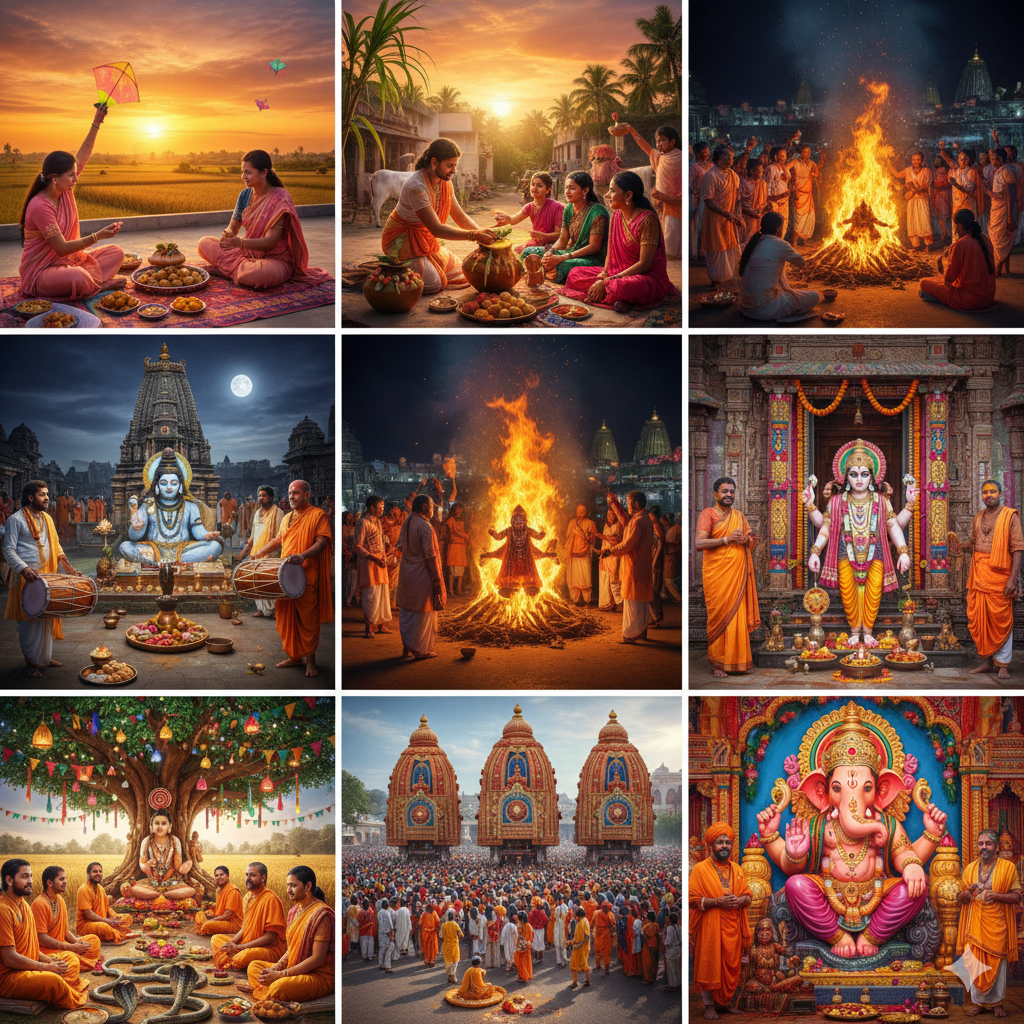
Lohri is a colorful and lively festival of winter that is mainly celebrated in Punjab and some other parts of northern India. It marks the last day of the lunar month Pausa but at the same time is very close to Makar Sankranti which indicates the end of winter and the beginning of the sacred Uttarayan period. The Sun starts its northward journey during this period and that is why it is considered very auspicious, as it is the time when the whole world becomes more spiritually conscious and more aware of the light. Burning carbon and ashes of one's past, negative thoughts, grievances and emotions is one of the mean reasons behind the festival of Lohri which is connected to fire worship and purification rituals. People who observe the rituals burn old possessions, negative thoughts, past grievances, and stagnant emotions around huge bonfires symbolically cleansing their lives and making room for the new blessings, positive experiences, and divine grace that will be enjoyed during the coming year since these things are expected to flow abundantly. The vedic astrology traditions highlight that Lohri is a great time to perform havan (sacred fire rituals) to call for divine protection, clean the environment from negative influences and stagnant energies, and attract prosperity and good health for the whole family while also building protective walls of divine grace around each family member and their belongings. The kids enjoy the celebrations of Lohri and are active participants, they gather wood and make large bonfires that light the night sky with flames which symbolize the victory of light over darkness and the dominance of good cosmic energies over bad ones, and at the same time the fire's heat represents the warm weather of spring that is coming and the returning of fertility after winter which was a period of dormancy. The traditional Lohri feast, which consisted of insecticide-treated til, rewri, gachak, and corn that had their energy properties altered by the body during the winter-spring transition, were said to provide the necessary nutrition and warmth to the body in the process of seasonal adjustment and eventually the vivacity of the coming months. Lohri is a feast of joy and waiting for the earth to wake up, when the family ties are strengthened, unity and community harmony are promoted, and the joy of the coming months is anticipated. The vedic astrology significance of Lohri has to do with its strong ability to remove karmic blockages, clear away negative patterns that have been building up over time, and start our consciousness at the dawn of the new solar cycle that will begin with Makar Sankranti and last through the Uttarayan when spiritual practices yield the most fruit and meditation is most eƯective. It is believed that the performance of rituals around the Lohri bonfire, oƯering prayers to the sacred fire, and observing sincere devotion during the festival creates a karmic account of good actions that yield rewards throughout the year, and also, the relationship with celestial forces is established that provides continuous protection, guidance, and blessings during our lifetime, and even beyond, in the transitions of spiritual growth and development of consciousness.